Loona is a startup that connects pet owners with the best pet hotels and daycares in the city.
Reading time
8 min
Role
Product Designer
Period
2024-2025
Context
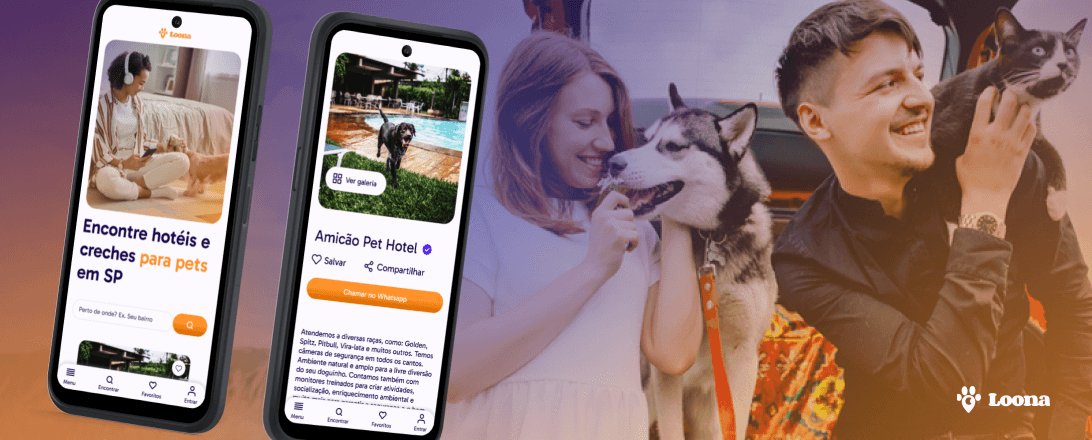
Loona is a startup that connects pet owners with the best hotels and daycares in the region. Created by me and two partners, the startup launched its first MVP in November 2023 with a basic application initially developed in WordPress with filters, maps, and cards, but without the ability to register users.
With the first MVP's one-year anniversary approaching, we felt the need to develop a more robust version of the platform built purely with code, since many users interacted with the product, including organically signing up for a newsletter. The new MVP would have more features and the ability to register users.

Goals
The MVP 2.0 aims to validate market reception of a more functional platform and confirm or refute product-market fit, resulting in either a pivot or expansion. Furthermore, it will serve as a basis for future feature additions and optimizations.
Value proposition:
Helping pet owners find hotels and daycares;
Reassuring pet owners that they are making good decisions;
Helping businesses find new customers.
Responsabilities
I lead the development of the new product from ideation to management/monitoring with front-end and back-end programmers. This includes research, conceptualization, contact with potential users, prototyping, and handoff.
//Desk Research
Defining the pillars and initiating the research.
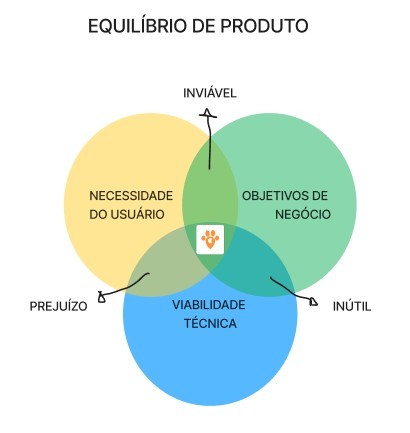
The research and ideation process always took into account the Product Balance Matrix, respecting profitability and viability, and creating solutions for real problems by focusing on user pain points.
User Centered Design Canvas
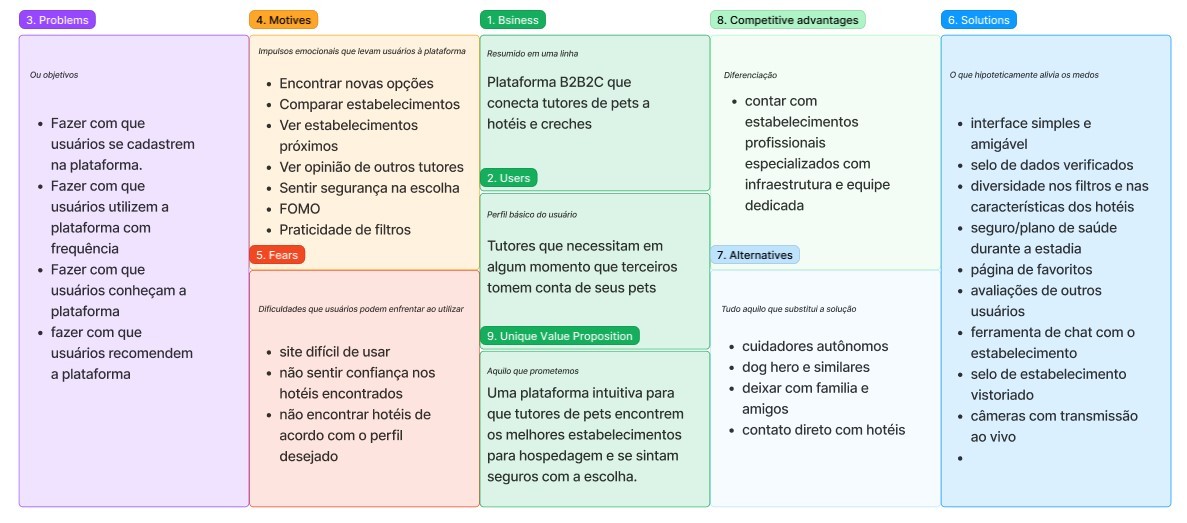
Used as a basis for product design, with the value proposition at the center of development. Initially, we decided to focus on the B2C market.
Benchmark
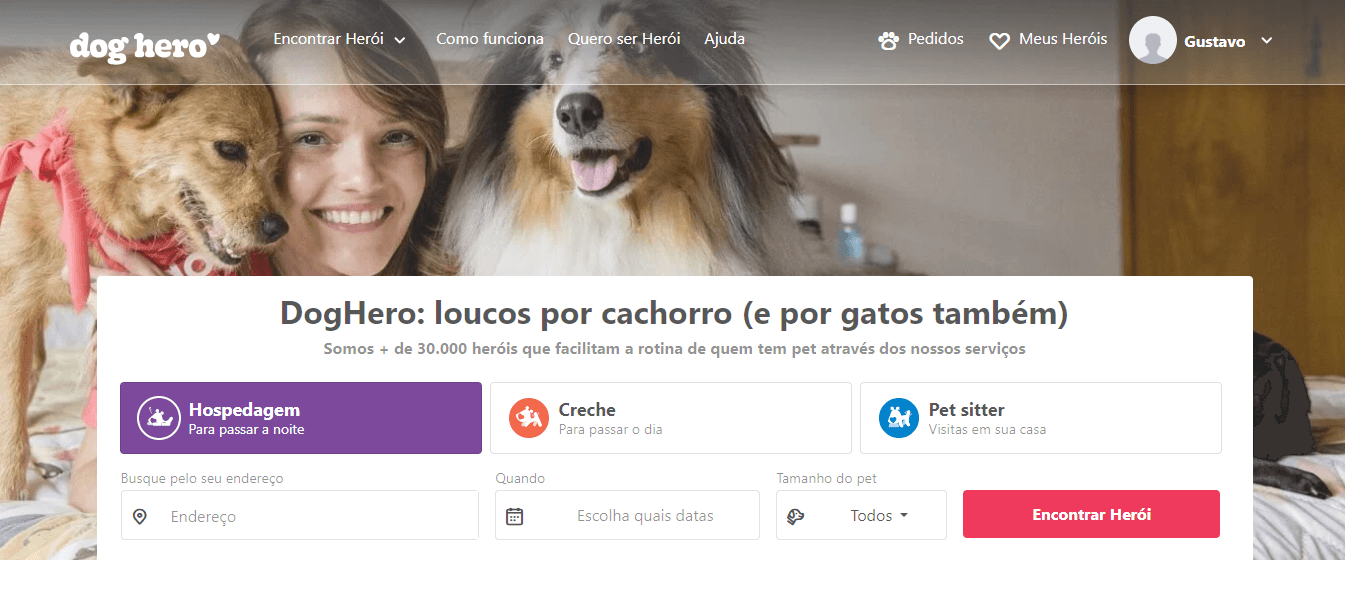
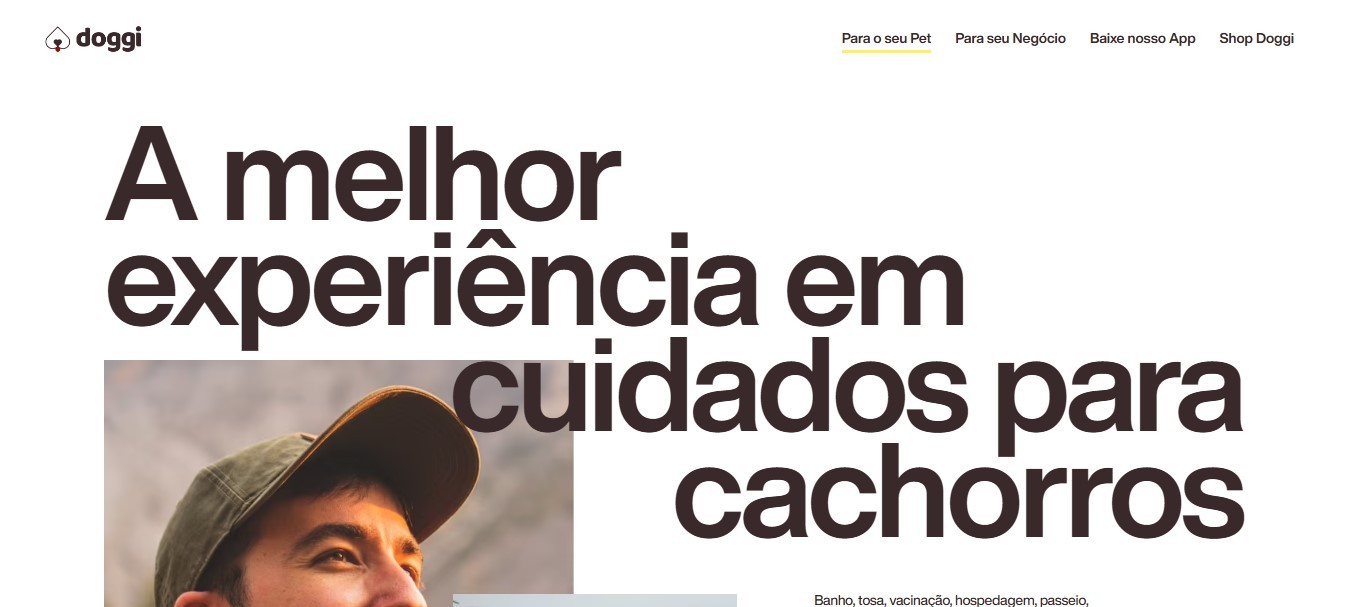
Two services have been identified that directly compete for the same market of interest to Loona: DogHero and Doggi.

Advantages
Biggest player in the sector
Large number of caregivers
It has veterinary insurance coverage.
Deltas
It relies solely on "individual" caregivers.
List-only view (interface)
Limited filter options

Advantages
It offers scheduling for other services.
Onboarding
Deltas
Does not have a web app
Very limited filter options.
Accommodation not yet available in SP.
No map
Application presented instability
//Survey
Drawing up a baseline profile.
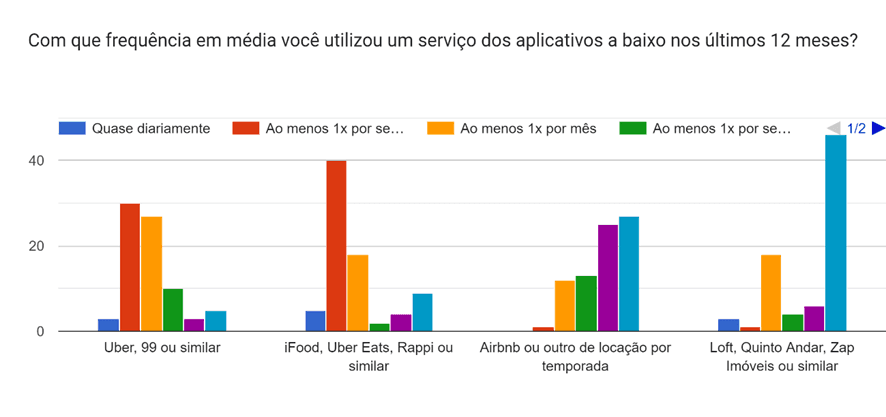
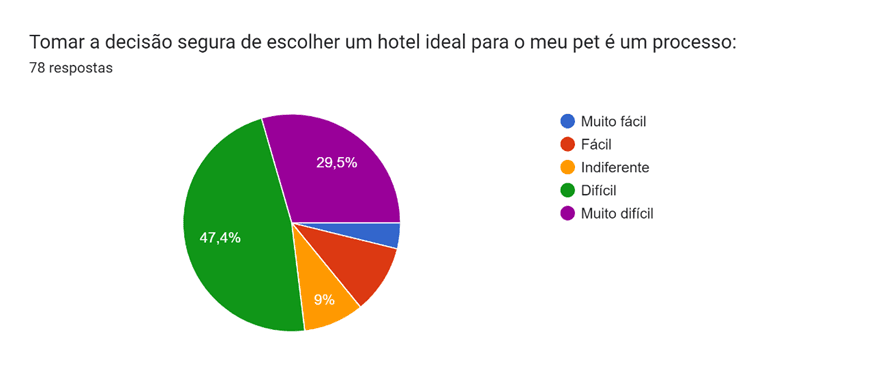
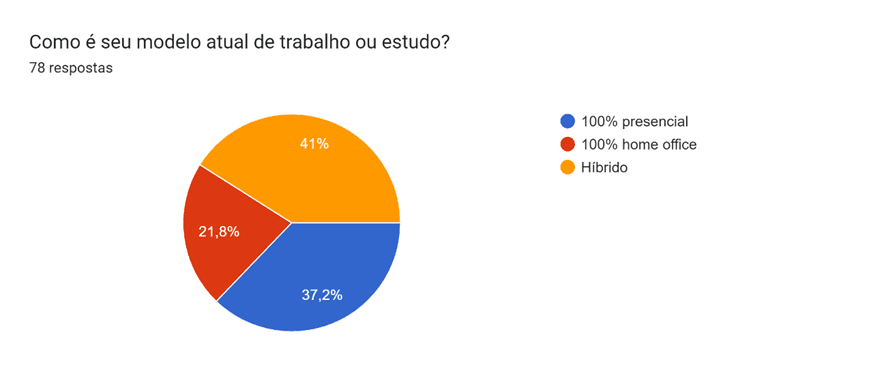
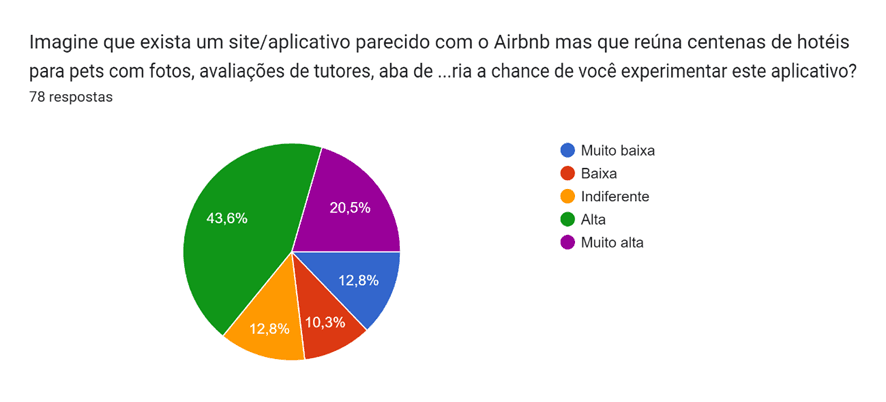
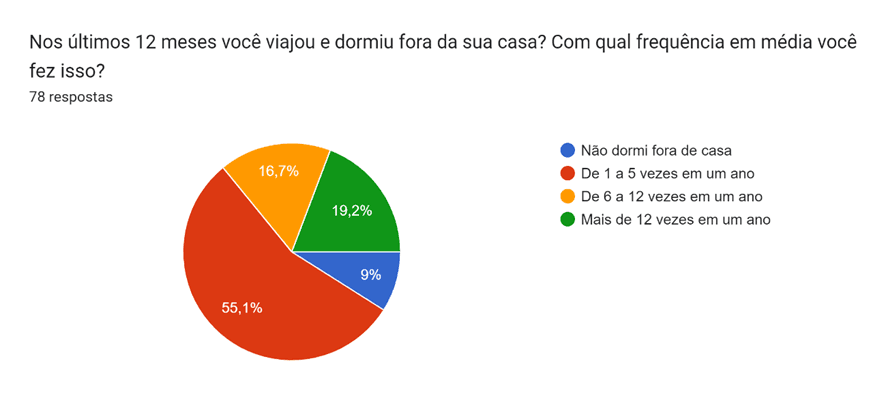
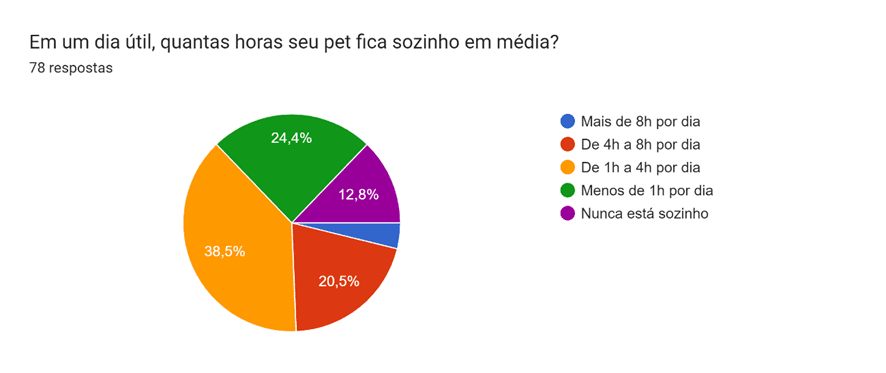
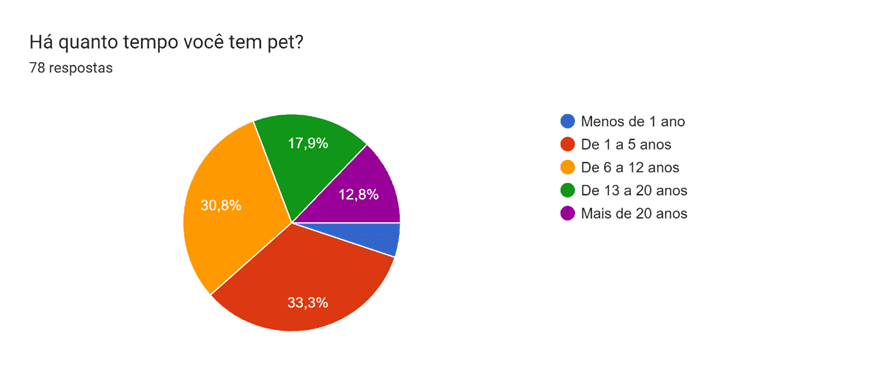
There was a need to quantify behavioral and demographic data from users. The first participants were recruited from family, friends, work, and condominium groups; they were required to be pet owners. Below are the main results from some of the 22 questions asked.
Survey goals:
1 - Identify a persona
2 - Understanding the behavioral profile
3 - Recruiting users for interviews and usability testing.
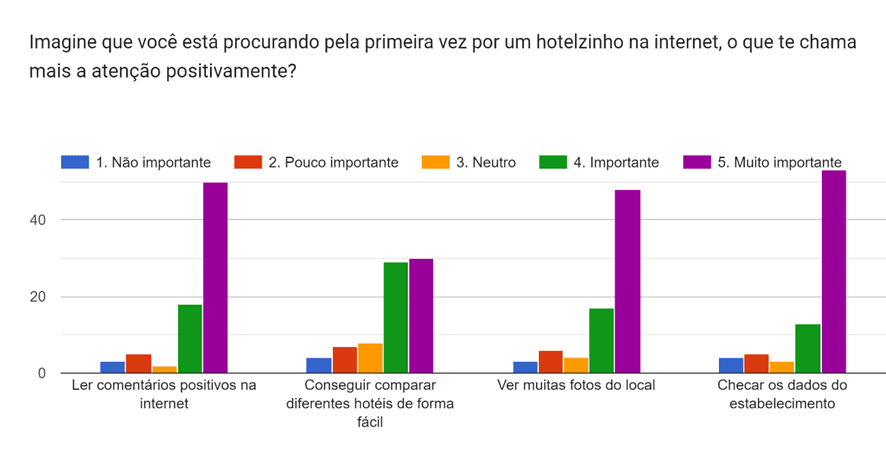
Qualitative answers
An open-ended response field was provided immediately after the image section on the left. The question was: “Do you consider any other factor not listed above to be important?”. The main themes and keywords mentioned were:
1 - Recommendation including "indication" (7)
2 - Live Footage (4)
3 - Price (3)
4 - Cleanliness (3)
5 - Experience (3)
Results
90 responses were collected over a period of 3 days. Of these, 22 were automatically disregarded because they were answered by non-tutors.
57 people filled in their contact information at the end of the survey, including their name and WhatsApp number.
//Interviews
Delving deeper and getting to know the users.
With the survey responses in hand, 9 users were invited for a more in-depth interview, resulting in 5 confirmations.
The selection criteria were:
Responded “High” or “Very high” to “What would be the chance of you trying this app?”;
Responded “Difficult” or “Very difficult” to “Making the safe decision to choose an ideal hotel for my pet is a process:”;
Responded “I worry” or “I cancel appointments” to “How do you deal with the idea of leaving your pet in someone else’s care?”;
Left contact information.
Method and Goals
A conversation aimed at building rapport and gaining insights into the issues raised. Some of the questions were:
• How do you usually handle boarding when your pet needs it?
• When was the last time you boarded a pet?
• How was the experience?
• What's the hardest part of the process of finding and boarding a pet?
• Do you do anything to make this task easier?
• How did you feel the last time you had to do this?
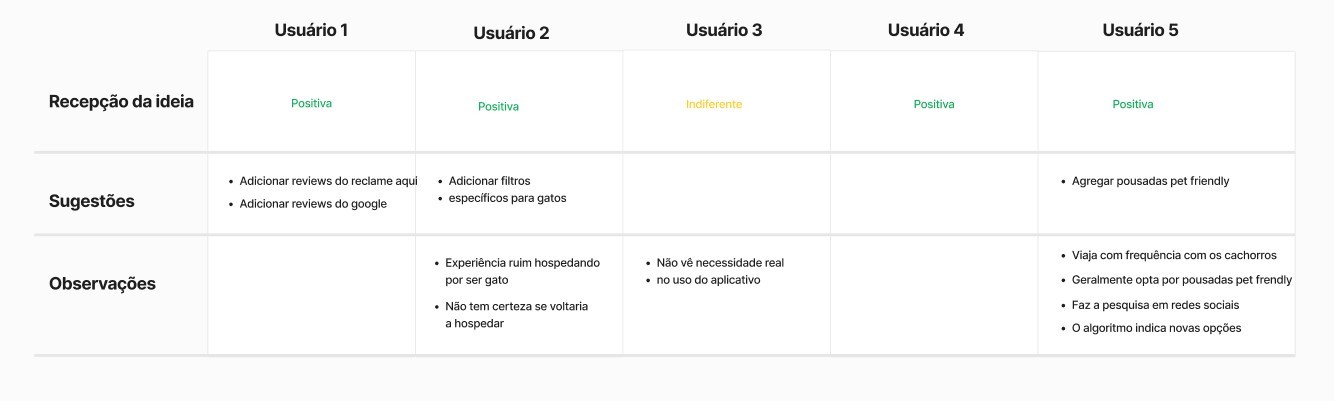
Results
At the end of the round of interviews, I was able to compile the main points addressed by each interviewee. Most users received the idea of the app with enthusiasm (4/5), one of them sees no advantage.
The suggested features included broadening the scope of filters and reviews.
User 5 raised relevant topics that could spark new market research.
//Persona
Creating a user profile based on research.
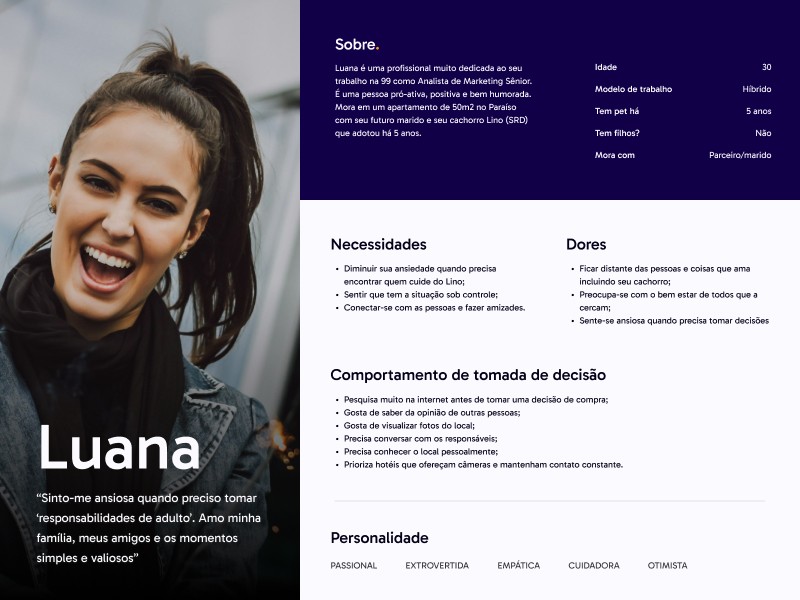
The persona was created based on quantitative and qualitative data collected during research and interviews.
The objective of this tool in the project was to guide product development and focus investments in marketing and branding.
It is understood that the profile created is not permanent, since new data will be collected as the application is used, thus allowing for a better understanding of user behavior and pain points.
//Prototype
Giving shape to the idea.
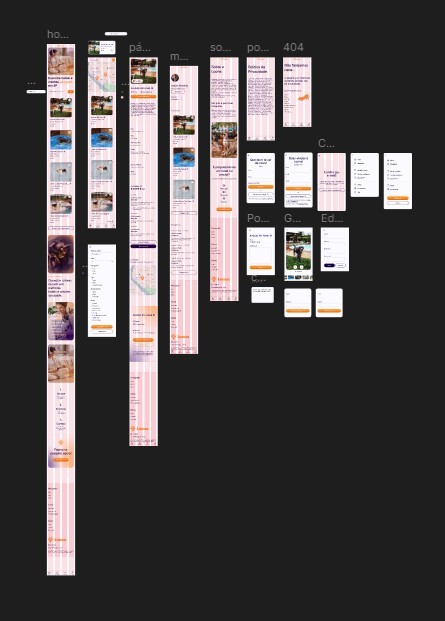
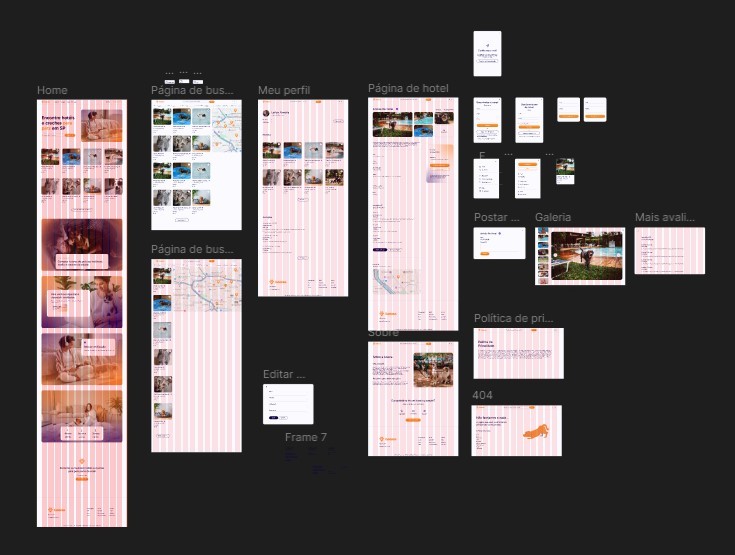
With the research completed and the persona defined, it's time to begin developing the prototype using Figma.
The features that received the most votes and were most frequently mentioned during the research were prioritized.
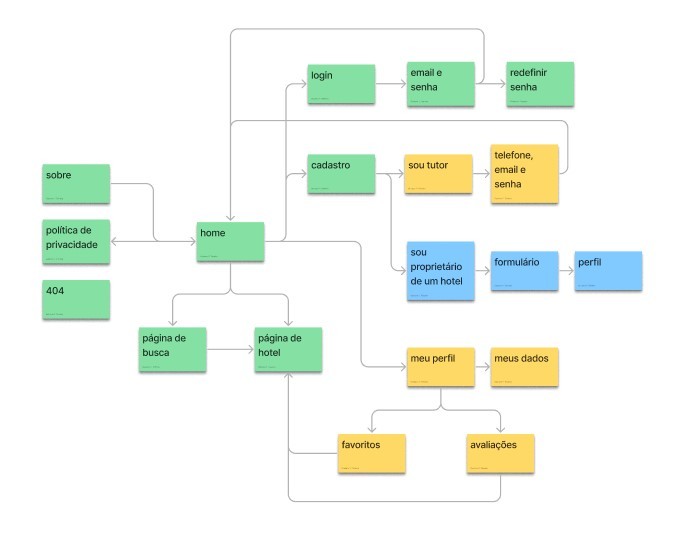
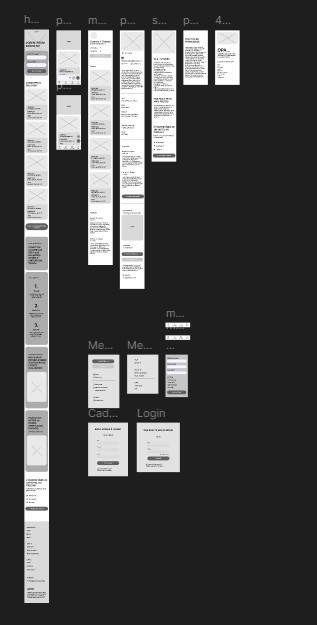
Sitemap
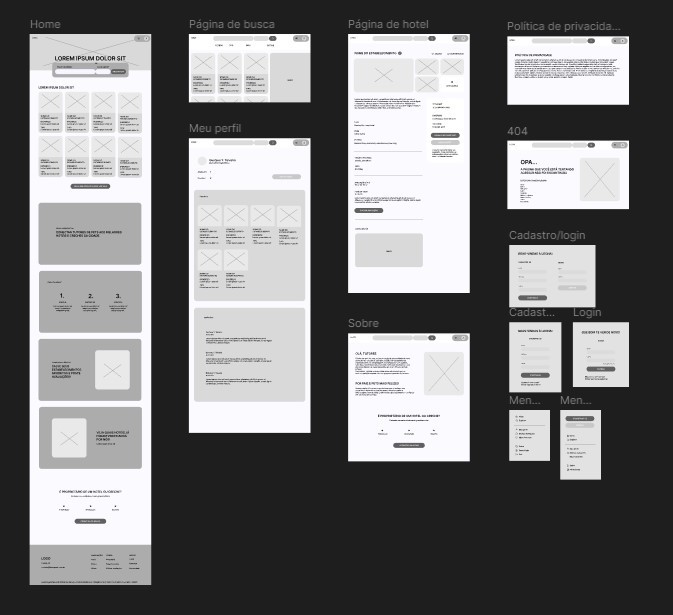
Lo-fi wireframes
Developed to organize the overall project interface.
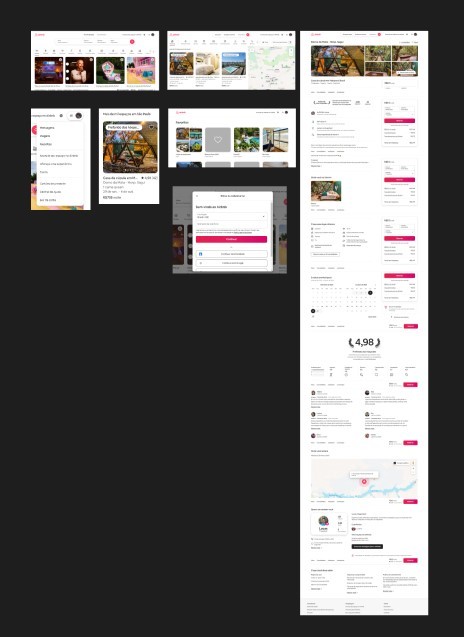
Moodboard and references
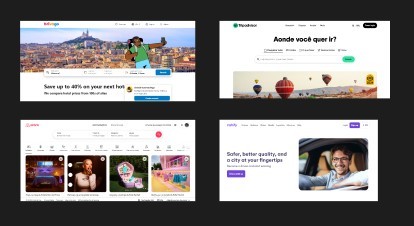
Airbnb was the main reference for the interface because it offers clean navigation that highlights CTAs. In addition, it has location "cards" that make browsing easier for users.
Dog Hero, Cabify, Trivago, and TripAdvisor also served as inspiration, especially for the hero section and the filter system.
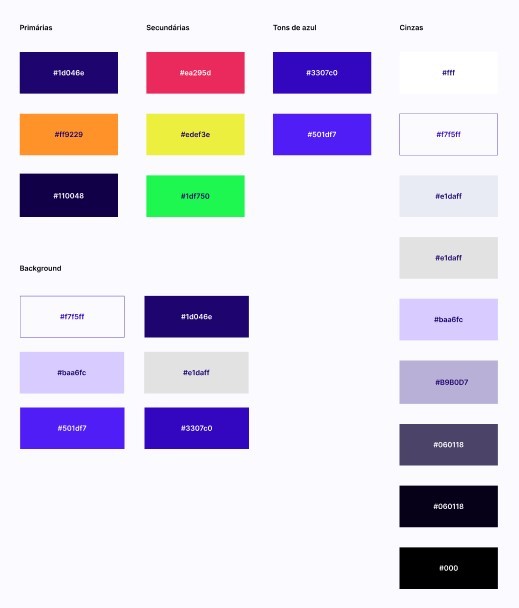
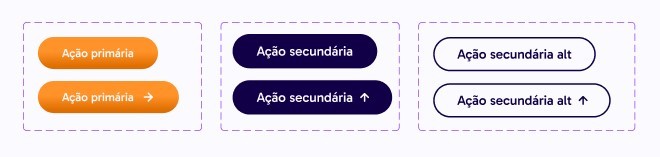
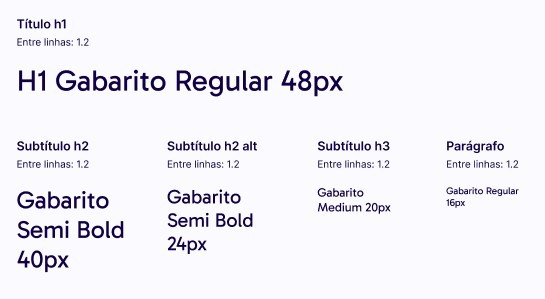
Style Guide and components
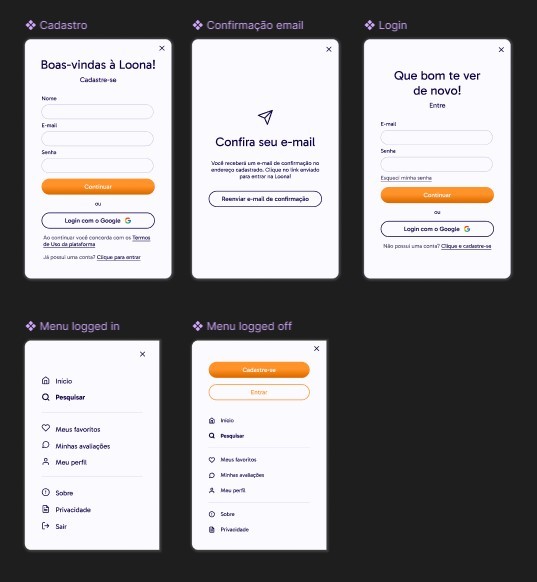
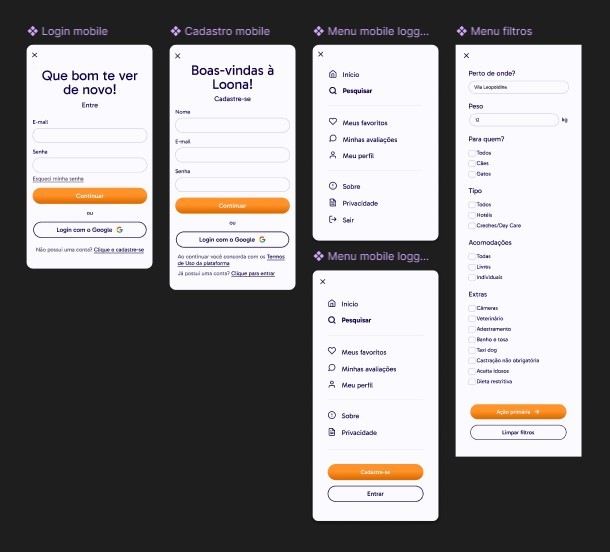
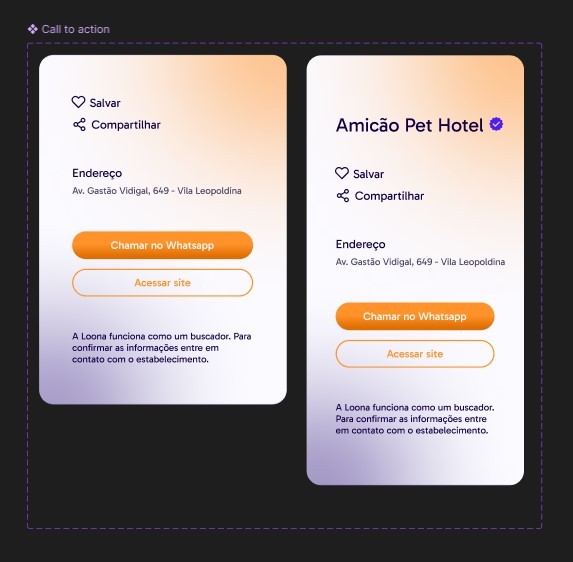
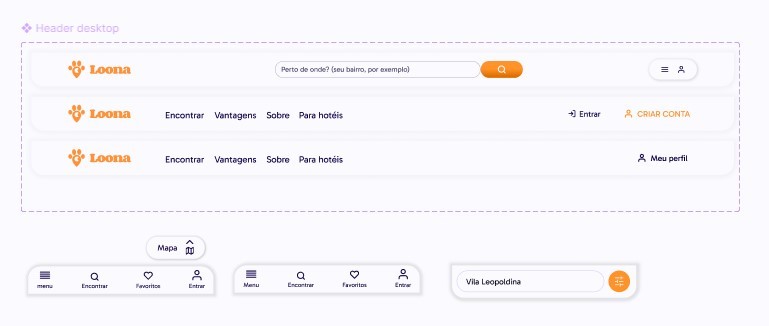
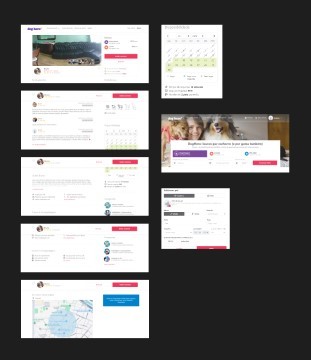
High fidelity prototype
//Usability Testing
Validating the interface in practice.
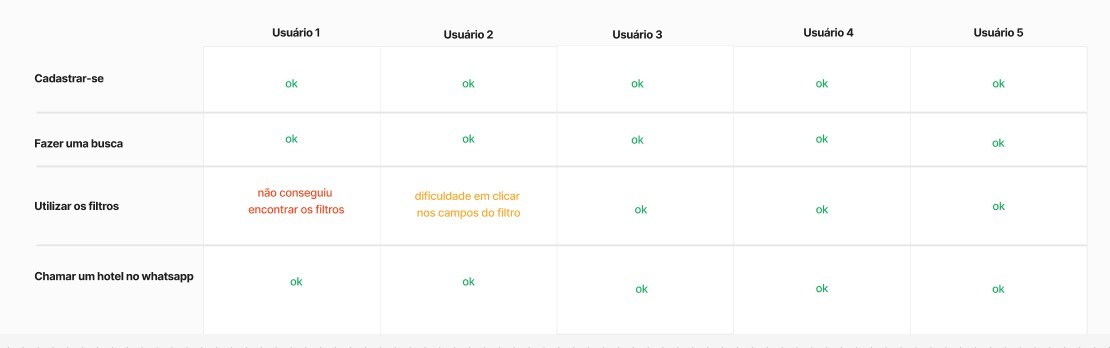
The same users who participated in the interview were recruited for the usability test.
One of them was replaced.
The test with User 2 was conducted in person.
The mobile version was chosen for the tests (mobile first).
//Insights
Optimizing the user experience.
Based on the test results, new solutions were designed to address the problems encountered by Users 1 and 2.
Improving the way filters are found.
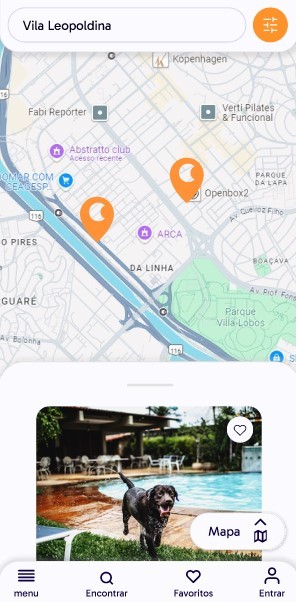
User 1 was unable to find the filters after performing a search on the home screen.
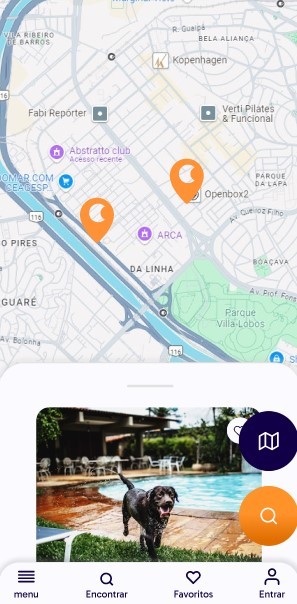
Problem:
On the home screen, the user could type an address and click "find," then be redirected to the results page where they could perform a new search or open the filters by clicking the orange button with the magnifying glass icon (image on the left). The filters were displayed in a modal that was activated when the orange button was clicked; this process caused confusion for the user.
Solution:
The new solution emerged by creating a text input field in the header with a filter button and a new icon. The search term entered on the previous page automatically appears in the header, and it is up to the user to filter the results.
Adapting the filters for a better mobile experience.
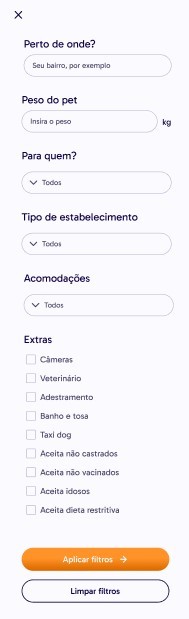
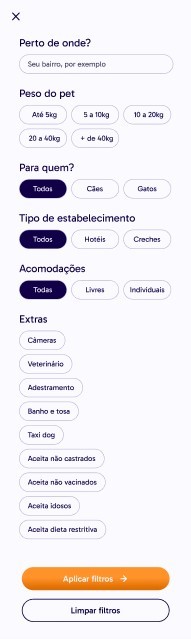
In an in-person test, User 2 had difficulty clicking correctly on the checkboxes and dropdowns.
Problem:
The filters in the mobile version provided a poor experience because they required precise typing (pet weight) and precise taps on the dropdowns (pet type, establishment type, and accommodations). The same problem appeared for the checkboxes in "extras".
Solution:
All filter options have been transformed into buttons. Five pre-defined weight categories have been created, eliminating the need for typing. Filters that previously required two clicks (expand and select) now have a full view. Extra filters have become buttons that activate and deactivate with a touch.